Hiring
How to Run a Campus Drive Online Without the Chaos
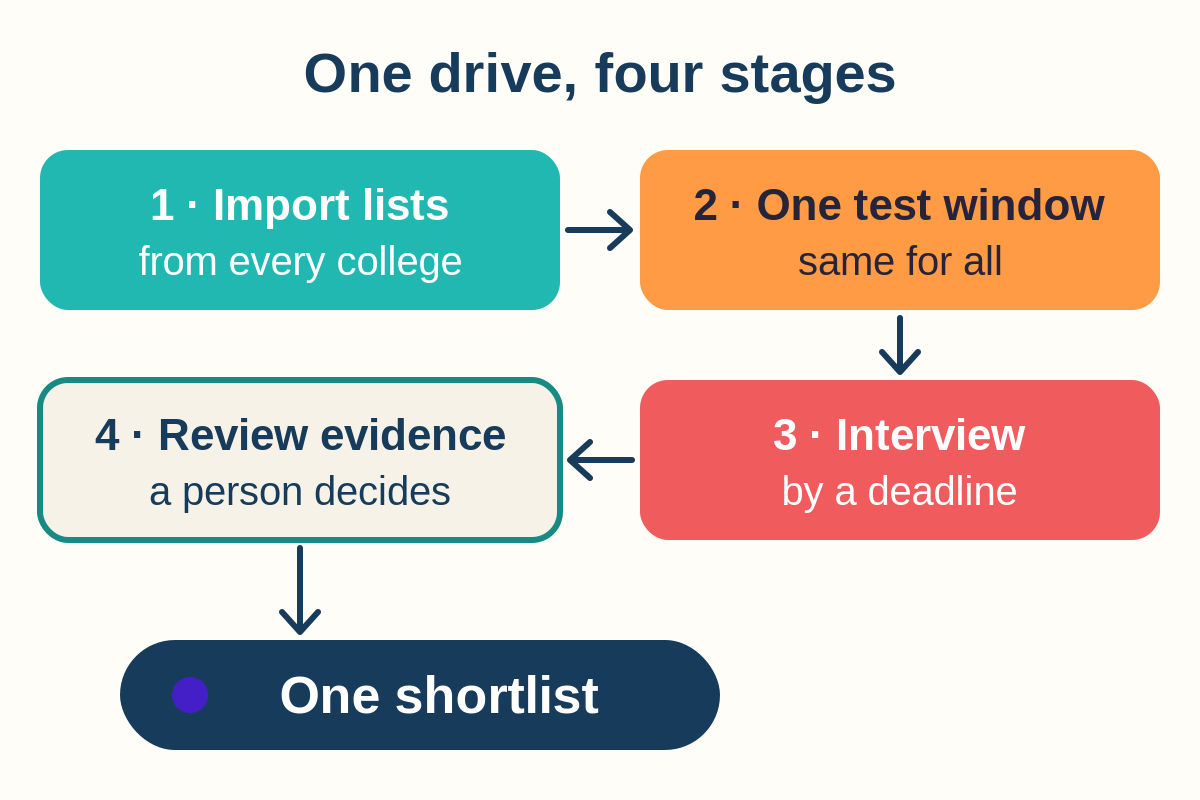
Run it as one pipeline: one test window for every college, interviews by a deadline instead of slots, and a person reviewing each borderline student.
Author
Xquizit
Reading time
3 min read

Say a placement officer sends you 800 student names for next week. You can book a hall and find 40 interviewers, or run the drive online and wonder who is really answering. Can one online drive give you a shortlist you'd trust?
Illustrative scenario · campus hiringRun the drive as one pipeline
The short answer first.
Run an online campus drive as one pipeline: one test window for every college, a short interview inside a deadline instead of booked slots, and one evidence page per student that a person reviews. Fix the rules and the rubric before you open the link.
We think online drives fall apart in the logistics long before the test itself goes wrong. A student can't log in. One college gets a different paper, and on the day you find out nobody agreed a pass mark.
Five rules to set before you send the link
Most of the work happens before day one.
Agree the cut first
Write the role criteria, pass mark and rubric with the hiring manager. Then leave them alone once the first college starts.
One test, one window, every college
Give every campus the same test and the same window. Randomise the questions so a neighbour's answers don't help.
Interview by deadline
Set a deadline and let students interview when they're ready. You no longer have to line up forty interviewers' calendars.
Plan for the dropped connection
Check supported devices and browsers, recovery instructions, retry options, and how candidates contact support. Fully proctored rounds need a laptop or desktop, so tell students a few days early.
Read the evidence behind the score
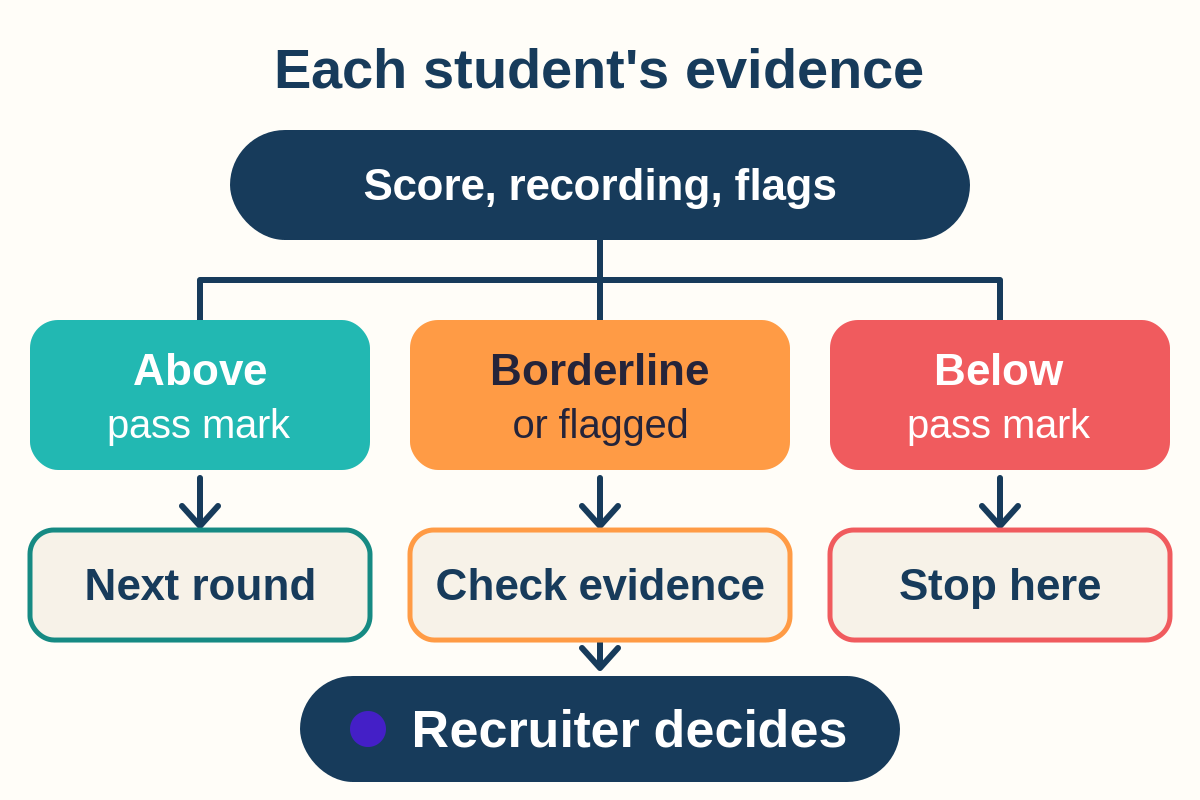
Look at the recording, the flags and their reasons before you cut anyone. A person decides every borderline case.

Where Xquizit fits
Each stage, mapped to what the product does today.
Xquizit takes student lists from campuses and spreadsheets and screens resumes against your job description in bulk. It builds role-specific tests from the job description, which you can edit, with randomised questions and per-question timing.
Xquizit automates invitations and deadline reminders, and its WhatsApp assistant answers students' process questions from information you configure. You set the score thresholds that move students to the next round. AI interviews run in parallel before your deadline, and a student who gets cut off can resume through the same link, though they lose the question that was on screen when it dropped.
Proctoring logs tab switches and flags events such as a second face, each with a reason, without ending the session. Where you switch it on, the Explanation Checker asks students to explain selected test answers, adding evidence of understanding alongside their score, though it doesn't prove cheating. Your recruiters review borderline cases and keep the final decision.
What we'd do
For those 800 names, I'd run the drive online. We'd spend the effort on the rules and the rubric before launch, let the software run the test and interviews in parallel, and put a person on every borderline student. Past a few hundred students, I'd take that over the hall and 40 interviewers.
Sources and notes
The 800-student drive in the opening is an illustrative scenario, not a customer or a real event. No external statistics are used. Role-specific test generation, editable tests and automated invitations and reminders are on the Xquizit features page. Candidate imports, bulk resume screening, question randomisation, per-question timing, WhatsApp FAQ answers, score thresholds between rounds, deadline-based parallel interviews, resumption, proctoring flags, the Explanation Checker and recruiter review controls are described in Xquizit product documentation, available on request.
See one drive set up from list to shortlist.
Latest insights
View all insights →
Why Candidates Skip Your Online Interview (and 5 Fixes)
By Xquizit
Most no-shows come from the process. Contact candidates the day they apply, give a deadline instead of a fixed slot and answer their questions early.
Read insight
Is Your English-Only Screen Costing You Your Best Hires?
By Xquizit
If the job is not done in English, yes. Interview candidates in the language the work uses and score everyone on one rubric.
Read insight
Would You Reject DRS Because It Got One Decision Wrong?
By Achin Agarwal
One bad AI interview call can put the whole idea on trial. Like DRS in cricket, the useful question is whether technology helps people make better hiring decisions than they would without it.
Read insight© 2026 Xquizit. All rights reserved | ALGO ONE AI PRIVATE LIMITED