Hiring
Is Your English-Only Screen Costing You Your Best Hires?
If the job is not done in English, yes. Interview candidates in the language the work uses and score everyone on one rubric.
Author
Xquizit
Reading time
3 min read

Picture a drive for 500 support roles across Pune, Chennai and Kolkata, and a first screen that runs in English. The candidate who would calm an angry caller in Tamil goes quiet, while the one with polished English sails through. Is your screen finding the best people for the job, or the people most at ease in English?
Illustrative scenario · hiring across languagesScreen in the language the job uses
The short answer, then one question per role.
If the job isn't done in English, an English-only screen is costing you good people. Interview each candidate in the language they will work in, and score everyone on the same job criteria. Make language a setting on the interview, so you don't need a bilingual interviewer for every batch.
Ask one thing per role: what language will this person use at work? For Tamil calls, interview in Tamil; for English email, test English. If the job needs both, test both and say so in the job post.
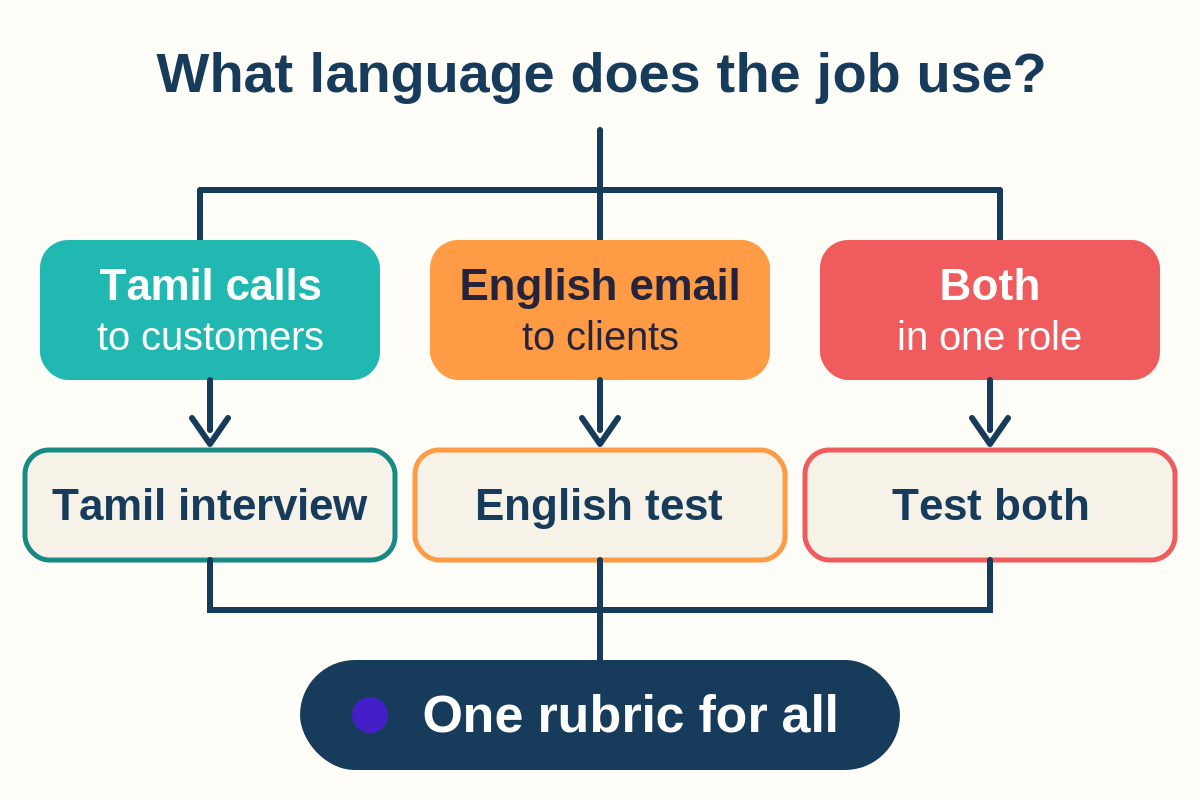
We'd drop English as a blanket filter and keep it for roles where English is the work itself.
One rubric, whatever language they answer in
Four rules we'd set before the first batch.
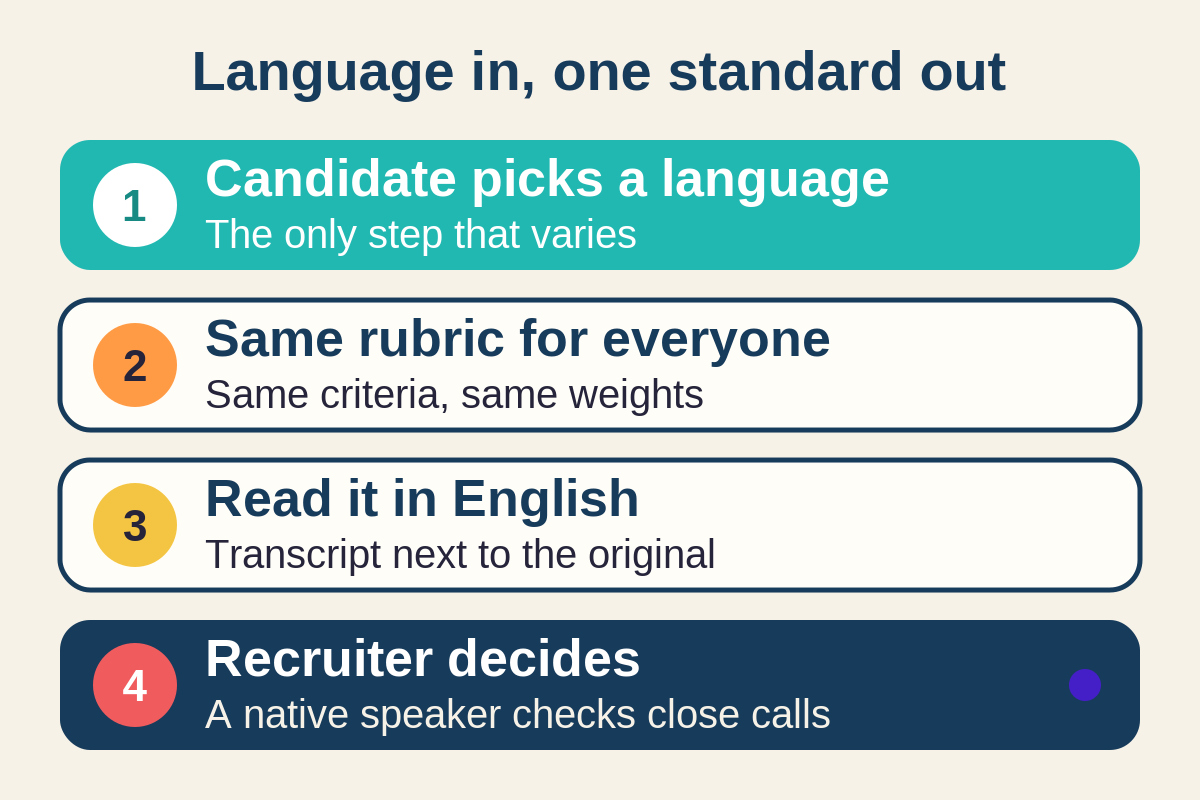
Write one rubric per role
Use the same criteria and weights for every candidate. Judge a Tamil answer and an English answer on what each one shows about the job.
Let the candidate choose
Offer the languages the role needs and let each person pick. Allow switching if your customers mix languages on real calls.
Review in one language
Read an English transcript and analysis next to the original answer. Your reviewers stay on one rubric without speaking every language themselves.
Spot-check the close calls
Have a native speaker listen to borderline answers, because a transcript can lose tone. Decide in advance what counts as borderline for each role.

Where Xquizit fits, and where phone is narrower
What the interview setup covers today.
Xquizit web AI interviews run in English, Hindi, Bengali, Gujarati, Kannada, Malayalam, Marathi, Odia, Punjabi, Tamil and Telugu. In the interview setup you enable the languages a role needs, set a preferred primary language, and choose whether candidates can pick a language or switch during the interview. In a demo, confirm which of these options your account has switched on.
A regional-language interview can produce an English transcript and analysis for your reviewers. You can edit the criteria and weights in the role rubric, and candidates finish before your deadline with no interview slot to book. Your recruiters review borderline cases and keep the final hiring decision.
Phone screening is narrower: calls run in English only, or in Hindi and English. Check which channel a role will use before you promise a candidate their language.
What we'd do
Yes, an English-only screen costs you hires whenever the job isn't done in English. We'd screen for the job: run each interview in the language the work happens in and score every answer on one rubric, with your recruiter making the final call. That way you hear from the candidates an English-only filter would have turned away.
Sources and notes
The 500-role drive in the opening is an illustrative scenario, not a customer or a real event. The web interview language list, language selection and the narrower phone languages are listed on the Xquizit vs TestGorilla page. Rubric-based evaluation and recruiter review controls are described in the Xquizit FAQ. English transcription and analysis of regional-language interviews, editable rubric weights and deadline-based completion are in Xquizit product documentation, available on request.
See an interview set up in your candidates' languages.
Latest insights
View all insights →
Why Candidates Skip Your Online Interview (and 5 Fixes)
By Xquizit
Most no-shows come from the process. Contact candidates the day they apply, give a deadline instead of a fixed slot and answer their questions early.
Read insight
How to Run a Campus Drive Online Without the Chaos
By Xquizit
Run it as one pipeline: one test window for every college, interviews by a deadline instead of slots, and a person reviewing each borderline student.
Read insight
Would You Reject DRS Because It Got One Decision Wrong?
By Achin Agarwal
One bad AI interview call can put the whole idea on trial. Like DRS in cricket, the useful question is whether technology helps people make better hiring decisions than they would without it.
Read insight© 2026 Xquizit. All rights reserved | ALGO ONE AI PRIVATE LIMITED